Clean
Clean hands, counters, and tools stop germs before they reach your food.

The 20-Second Method
How to Wash Your Hands
Wet, soap, scrub for 20 seconds, rinse, and dry. Scrubbing is what removes germs.
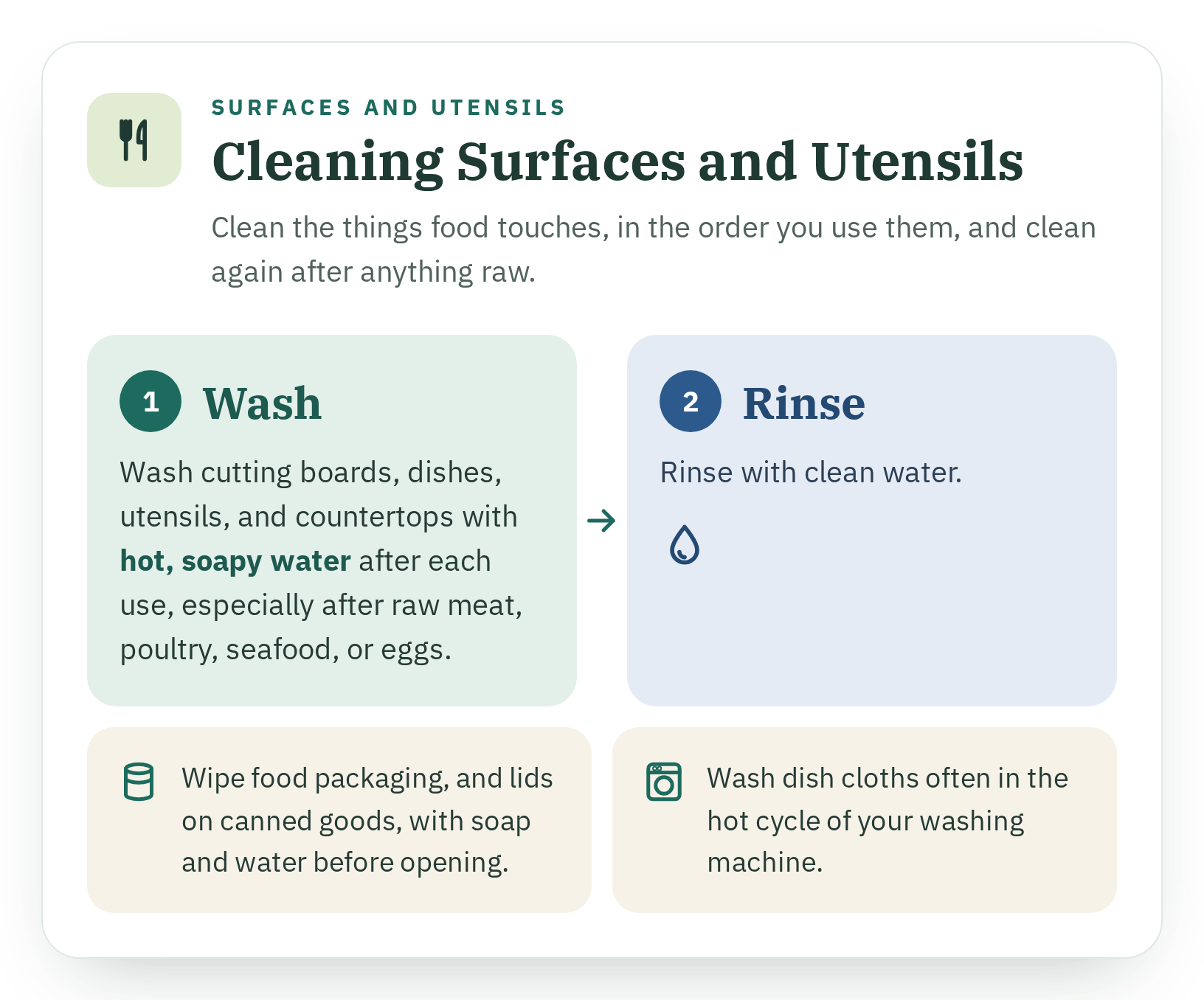
Click the infographic to open it full size.

Step-by-Step Guide
How to Clean and Sanitize Counters and Sinks
5 steps, plus how to pick a no-rinse sanitizer.
See the 5 StepsAfter Raw Meat and Fish
Sanitize Dishes, Utensils, and Cutting Boards
Anything that touched raw meat, poultry, fish, or eggs needs more than a wash. Your dishwasher can sanitize it.
- 1
Scrape and Load
Scrape off food, then load cutting boards, knives, tongs, and plates so water can reach every surface.
- 2
Choose the Sanitize Setting
Pick the Sanitize setting (sometimes called High Temp or Sani-Rinse). Look for NSF/ANSI 184 in your manual. It means the final rinse reaches about 150°F.
- 3
Use the Heated Dry
Let the full cycle and heated dry finish before you open the door.
- 4
Wash Hands, Then Unload
Wash your hands before you unload, so clean dishes stay clean.
Check your cutting board's care label first. Many wood boards can't go in the dishwasher.
Important
Never Wash Raw Meat, Poultry, Fish, or Eggs
Water splashing from the sink can spread bacteria around your kitchen. This is a direct FDA recommendation.